Spiritual Activism & Social Justice
A path of inner transformation, human rights and compassionate action.
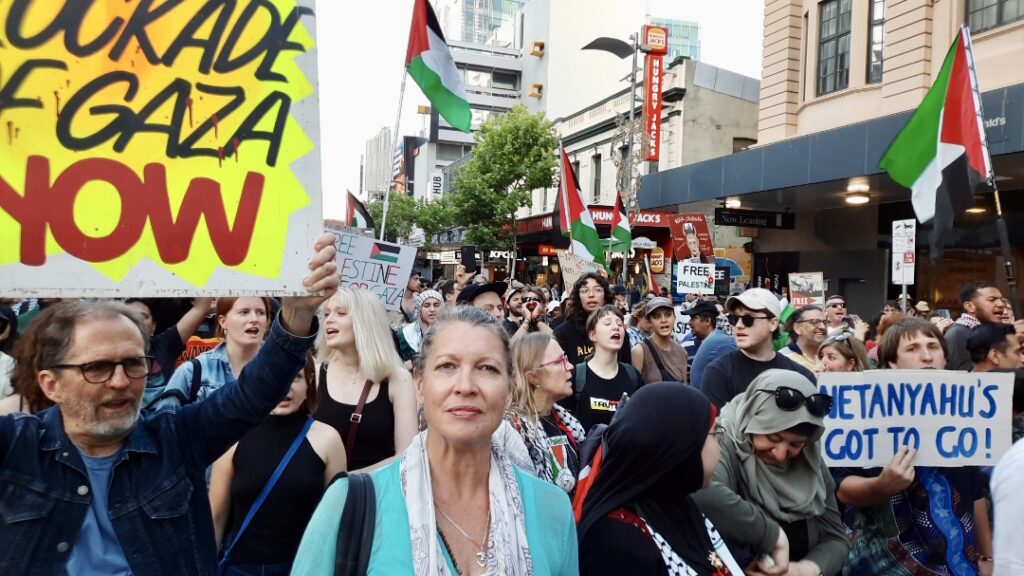
I am a humanitarian, activist, and advocate for human rights. For me, this work is not separate from spirituality – it is a living expression of Yoga and of the Dharma.
Like many teachers and changemakers before us, including the Buddha himself, I believe that sincere inner work naturally calls us into relationship with the suffering of the world. When our commitment to inner peace is genuine, it does not end with personal wellbeing. It expands into care for others. It becomes a commitment to outer peace, justice, dignity, and truth.
At the heart of spiritual activism is the understanding that there is no true separation between inner and outer, self and other, or personal healing and collective healing. We share a common humanity, a common longing for freedom, and a common responsibility for the world we are helping to shape.
An injustice to some is an injustice to all. Whether we choose to act or not act, we are always contributing to the collective consciousness. The question is not whether we have influence, but how we will use it.
As the Bhagavad Gita teaches, “Yoga is skill in action.” Spiritual activism invites us to bring awareness, compassion, courage, and moral clarity to the places where harm is occurring – and to respond with mindful, skilful action within our capacity and circle of influence.
What is Spiritual Activism?
Spiritual activism is the meeting place of inner transformation and social change. It is the practice of living our values through both contemplation and courageous action.
It asks us to deepen our spiritual life not as an escape from the world, but as a way of meeting the world more truthfully. Meditation, prayer, self-inquiry, and embodied awareness can help us become more grounded, less reactive, and more capable of responding to injustice with wisdom rather than projection.
At the same time, spiritual activism recognises that spirituality without compassion in action can become disconnected from reality. If our practice does not help us care more deeply, listen more honestly, and act more courageously on behalf of human dignity, then it risks becoming self-enclosed.
This path is not about perfection. It is about participation. It is about showing up with sincerity, humility, and a willingness to keep learning.
Spirituality and Social Justice
For me, spirituality and social justice belong together.
Human rights work is not outside the spiritual path. It is one of the ways that love, truth, and nonviolence take form in everyday life. To honour the sacredness of life while ignoring oppression, inequality, racism, war, or dispossession would be a contradiction.
Spiritual activism asks us to live from a deeper understanding of interdependence. There is no “us and them.” There is only our shared Presence, our shared humanity, and our shared responsibility to protect one another’s dignity and freedom.
This does not mean acting from blame or self-righteousness. It means acting from awareness. It means allowing compassion to mature into responsibility. It means being willing to stand for justice while also doing the inner work needed to remain grounded, honest, and open-hearted.
As Swami Rama wrote:
“The human race is suffering from its ego-born narrow-mindedness. Discrimination exists, based on religion, colour and nationality. As long as these man-made divisions exist in our society, there is no hope for peace or happiness. True freedom means loving all and hating none, including all and excluding none. For cultivating the true human within, we have to reach out to the hearts of our fellow human beings…”
This vision continues to guide me.
Inspiration from Nonviolent Leaders
I take inspiration from leaders such as Nelson Mandela, Mahatma Gandhi, and Martin Luther King Jr., who each integrated spirituality and activism in their own way. Their lives remind us that social transformation can be rooted in truth, dignity, discipline, and nonviolence.
Their example reinforces a central principle of spiritual activism: inner work and outer action are not separate paths. When joined together, they become a powerful force for healing and change.
I am committed to naming injustice and taking action – individually and collectively – in support of oppressed and marginalised communities. Far from leading only to despair, this work has brought deeper meaning, purpose, and even joy into my life. It has taught me that courageous compassion is life-giving.
How to Begin the Spiritual Activism Journey.
The spiritual activism journey begins with radical honesty.
Regardless of your nationality, religion, or upbringing, it is important to take an honest look at your conditioning, your assumptions, and the forms of privilege or power you may hold. This is not about guilt for its own sake. It is about becoming conscious enough to act responsibly.
A good place to begin is by learning the truth about the history of the land where you live and the experiences of the First Peoples and marginalised communities around you. Who has been excluded, silenced, dispossessed, or harmed? What narratives have you inherited without questioning? In what ways has ignorance – even unconscious ignorance – contributed to injustice?
Spiritual activism also asks us to listen deeply to the voices and lived experiences of people from different races, cultures, religions, and social circumstances. Listening with humility can challenge the stories we have been taught and open us to a more truthful understanding of the world.
This process can bring discomfort. You may feel grief, anger, shame, helplessness, or confusion. That discomfort does not mean something has gone wrong. Often, it is part of waking up. The work is to stay present, do the inner integration, and allow your awareness to ripen into grounded, compassionate action.
Spiritual activism becomes powerful when it is rooted in understanding, love, and unity rather than separation, projection, or personal rage alone.
Practical ways to begin
- Learn the history of the land where you live and whose Country you are on.
- Reflect on your conditioning and privilege with honesty and compassion.
- Listen to marginalised voices directly rather than relying only on dominant narratives.
- Support community-led movements already doing the work.
- Stay with discomfort long enough for it to deepen your awareness.
- Take one meaningful action within your own circle of influence.
My Own Journey
Living in Western Australia, I recognise that I am part of a privileged, middle-class, predominantly white society shaped by material comfort and settler colonial history. Aboriginal people are the traditional First Nations custodians of the land where I was born and live, and they continue to carry the impacts of invasion, dispossession, racism, and intergenerational trauma.
Before my 30s, I was largely unaware of white privilege and of the full human impact of settler colonialism on Aboriginal people. It took time to process the shame, grief, and anger that came with learning more deeply – and to confront the racism that existed within my own family and social environment.
Integration has been essential. In more recent years, getting to know Aboriginal Elders and learning about the White Australia Policy, the Stolen Generations, and the massacres and systemic injustices experienced across Western Australia has helped me become both better informed and more committed to speaking up and taking action.
It can be tempting to turn away from the painful realities of racism, colonialism, capitalism, and imperialism in the modern world. But in Yoga, ignorance is not liberation. Truth matters. And truth, when met with courage and compassion, can become a force for healing.
What Are Universal Human Rights?
Human rights are the basic rights and freedoms that belong to every person, simply because they are human. They are grounded in dignity, equality, freedom, and mutual respect across cultures, religions, and philosophies. They shape our ability to live safely, speak freely, participate in society, and make genuine choices about our lives. They also protect us from violence, discrimination, arbitrary detention, exploitation, and degrading treatment.
Following the devastation of World War II, the Universal Declaration of Human Rights was adopted by the United Nations in 1948. It sets out 30 Articles that affirm the fundamental rights and freedoms of all people everywhere.
Article 1 states: “All human beings are born free and equal in dignity and rights.”
Human rights belong to each of us, and responsibility belongs to each of us as well. In a world shaped by inequality, conflict, and rapid change, upholding human rights is not only the work of institutions – it is also the work of ordinary people willing to care, learn, and act.
Human rights include
- Rights to dignity and freedom, including liberty, safety, and freedom from slavery, torture, and degrading treatment.
- Women’s rights, including equality, education, health, and freedom from discrimination.
- Indigenous rights, including protection from forced removal, genocide, and cultural erasure, as well as the right to land, language, culture, and self-determination.
- Legal rights, including access to justice, legal representation, fair trial, and humane treatment in detention.
- Social rights, including education, freedom of expression, peaceful assembly, movement, privacy, and freedom from discrimination.
- Religious and cultural rights, including the freedom to practise, express, and participate in one’s beliefs, traditions, and cultural life.
It is also worth remembering that Article 29 affirms that we all have responsibilities to one another. Human rights are not only about what we are owed – they are also about how we choose to uphold the dignity and freedom of others.
Human Rights Issues I Care About
In 2024, Amnesty International reports “there is a stark betrayal of human rights principles by today’s leaders and institutions” – therefore the urgency for citizens like you and me to play our part in social justice has never been greater.
There are many urgent human rights issues in the world today. My own advocacy is currently focused on Indigenous Australian rights and Palestinian human rights.
These are not the only causes that matter. They are two areas where I feel especially called to listen, learn, speak, and act.
Indigenous Australian Rights
To support Indigenous Australians meaningfully, we must first understand the long history and ongoing reality of colonisation, discrimination, dispossession, and marginalisation.
These injustices continue to contribute to serious social and economic inequalities, including poverty, poorer health outcomes, reduced access to education, over-policing, and high rates of incarceration.
If you live in Western Australia, a powerful place to begin is by learning about Noongar boodja, Noongar culture, and the history and impacts of the Stolen Generations. Truth-telling and reconciliation remain deeply necessary.
Aboriginal people in Western Australia experience some of the highest incarceration and mortality rates in the country. This causes profound and ongoing trauma for individuals, families, and communities. Ending the systemic over-representation of Aboriginal and Torres Strait Islander people in the justice system would not only support Indigenous communities – it would strengthen the whole society.
I also recommend watching the documentary Genocide in the Wildflower State and learning from organisations such as Noongar Kaartdijin, Social Reinvestment WA and Reconciliation WA.
As Djinyini Gondarra said:
“The land is my mother. Like a human mother, the land gives us protection, enjoyment and provides our needs economic, social and religious. We have a human relationship with the land: Mother, daughter, son. When the land is taken from us or destroyed, we feel hurt because we belong to the land and we are part of it.“
Palestinian Human Rights
The suffering of Palestinian people did not begin with the Gaza genocide in 2023.
Since 1967, Palestinian people have lived under military occupation by the State of Israel. In July 2024, the International Court of Justice declared Israel’s occupation of the Palestinian Territories – including Gaza, the West Bank, and East Jerusalem – to be unlawful, and stated that the occupation and settlement activity must end. Despite this, Palestine continues to remain occupied.
Palestinians are the Indigenous Arab people of the Levant, and for generations they have faced dispossession, displacement, siege, and denial of fundamental human rights. These include the rights to freedom of movement, safety, self-determination, family life, medical care, and the right to live freely on their own land and return to their homeland.
These realities affect not only Palestinians living in Gaza, the West Bank, and East Jerusalem, but also Palestinians in the diaspora, including 15,000 living in Australia. I have come to love the vibrant Palestinian community in Perth.
To learn more or support Palestinian human rights, I encourage you to explore the work of the Australia Palestine Advocacy Network, Amnesty International and the United Nations Human Rights Office.
You can also follow Heart of Truth for Palestine, the Instagram page I have created to honour Palestinian voices, culture, and truth-telling.
A Path of Compassionate Action
If you are reading this page, there is a good chance you already feel that spirituality cannot stop at personal peace alone. You may sense that love, truth, and awareness must also find expression in how we respond to injustice in the world.
That is the heart of spiritual activism.
It is the willingness to remain open-hearted without turning away. To tell the truth without losing compassion. To act with courage without abandoning humility. To keep learning. To keep listening. To keep showing up.
Ordinary people do have power. Our voices matter. Our attention matters. Our choices matter. Together, we help shape the moral and spiritual culture of the world we live in.
May we be willing to stand for human dignity, defend human rights, and live for the highest possibility of peace we can imagine – not as an abstract ideal, but as a daily practice of awareness, compassion, and courageous action.
